
When Should You Bring Your Dodge in for Service?
Follow the maintenance schedule in the owner’s manual, then use the following as a practical guide.
Do not continue driving. Arrange service immediately.
- Oil pressure warning
- Rising temperature gauge, steam, or a strong coolant odor
- Sudden loss of brake performance or a grinding noise with a long pedal
- Visible smoke from the engine compartment, particularly with a burning-oil smell
Schedule inspection promptly.
- A persistent tick on a 5.7L or 6.4L HEMI that does not subside after start-up
- Transmission shudder, delayed engagement, or flaring between gears
- Air conditioning that warms after sustained driving
- A battery that fails after the vehicle sits for a short period
- A Check Engine light that returns after being cleared
- Moisture in a Durango liftgate or fogging of the rear lamp assembly
Keep on a planned service interval.
- Oil and filter service, using a severe-service interval when most trips are short and hot
- Brake inspection before extended travel
- Cooling-system service before summer
- Transfer-case and differential fluid on AWD Durango models
- Transmission fluid service, especially on Journey and Grand Caravan models with incomplete service history
A dashboard warning on a Dodge may indicate an engine, transmission, or electrical concern. Diagnosis should precede parts replacement.
Common Dodge Models We Repair
Several Dodge models are common on San Fernando Valley roads, and each has a fairly consistent set of service needs.
- Dodge Charger: A frequent daily driver, from V6 SXT models to HEMI R/T and Scat Pack versions. Typical work includes brake service, cooling-system repairs, oil leaks, and electrical diagnosis. HEMI models also need attention to valvetrain noise and, on higher-mileage or harder-driven cars, rear-differential wear.
- Dodge Challenger: Shares many systems with the Charger and shows many of the same repair patterns: brakes, cooling, leaks, and electronics. Performance brake packages require the correct pads, rotors, and fluid. Manual-transmission cars often need clutch and hydraulic inspection as they age.
- Dodge Durango: The brand’s three-row SUV, often used for family driving and towing. Common repairs include brakes, rear shocks, cooling-system components, and AWD fluid service on models equipped with all-wheel drive. 5.7L and 6.4L HEMI Durangos are subject to the same lifter and camshaft concerns as the cars. 3.6L Pentastar models are known for oil-filter housing leaks.
- Dodge Journey: Still widely used as an affordable family crossover. As these vehicles age, they often need transmission service (especially the 62TE), cooling-system repairs, and front-end work such as control arms, bushings, and brakes. A thorough inspection is especially useful after a used purchase.
- Dodge Grand Caravan: A work and family van that accumulates heat cycles and idle time. Frequent needs include transmission service, brake work, cooling-system repairs, sliding-door hardware, and Pentastar oil-filter housing leaks on 3.6L models.
- Dodge Hornet: The current compact crossover in the lineup. Service is more often related to routine maintenance, brakes, air conditioning, and electronic or driver-assistance diagnosis than to the older HEMI valvetrain issues.
These are the Dodges we see most often at our shop. Whatever the model, the repair plan depends on the year, the engine, and how the vehicle is used.
What Needs Repaired Most Often on Dodge Vehicles?
Every Dodge that comes in gets a proper inspection and diagnosis first. Some of the most common repair needs we see include:
- Persistent HEMI tick: Some light noise at cold start is normal. A tick that stays, grows, or appears after a stretch of short trips can indicate MDS lifter wear on 5.7L and 6.4L engines. Left alone, that wear can damage the camshaft. An inspection now is how you learn whether you are listening to a small problem or a developing one.
- Oil leaks on the 3.6L Pentastar: The factory plastic oil filter and cooler housing sit in a hot part of the engine. Over time, it can crack, or the seals can flatten, and oil runs down the back of the block. That pattern is often mistaken for a rear main seal leak. We confirm the source first. Valley heat makes this failure more common than the manual implies.
- Electrical problems and no-starts: A car that starts one morning and not the next, drains a battery while sitting, or operates locks and windows inconsistently is not always in need of a battery. On many Dodges, the TIPM, grounds, or charging system are involved. Replacing the battery without testing those items is how the same symptom returns a week later.
- Transmission shudder or slip: On Journeys and Grand Caravans, the 62TE is sensitive to heat and neglected fluid. Later eight-speed units suffer when fluid has lived too long in traffic or behind a trailer. We evaluate shift quality, scan for related codes, and look at service history before recommending fluid service, further diagnosis, or a larger repair.
- Cooling-system leaks and overheating: Water pumps, thermostat housings, radiators, and fans that were adequate in spring can fail in August. Idling with the air conditioning on in Van Nuys heat is a genuine load on these parts.
- Brakes and suspension: Durango weight, Charger and Challenger performance use, and high Journey mileage all wear pads, rotors, control arms, and bushings. A new vibration in the steering wheel is often the car, not the pavement.
What Regular Maintenance Actually Saves Dodge Owners
Dodge publishes a normal schedule and a severe schedule. Most commuting in this area — trips under ten miles, air conditioning from start-up, and long stretches of low-speed traffic — belongs on the severe schedule, even if the vehicle never leaves paved roads.
Staying on that schedule does more than keep a stamp in a book. Fresh oil protects HEMI lifters and a Pentastar that already runs hot. Coolant that is still in spec is what keeps a slow day on the 405 from becoming an overheat. Transmission fluid that has not cooked in traffic is often the difference between a service and a rebuild conversation. Brake fluid, differential fluid, and transfer-case fluid on AWD Durangos follow the same logic: they are inexpensive compared with the systems they protect.
When your Dodge is here for oil service, we inspect fluids, leaks, brakes, belts, tires, and lights and tell you what is in good condition, what is coming due, and what can wait. That list should be specific to your car and how you use it.
What You Gain by Choosing AutoAid for Dodge Service
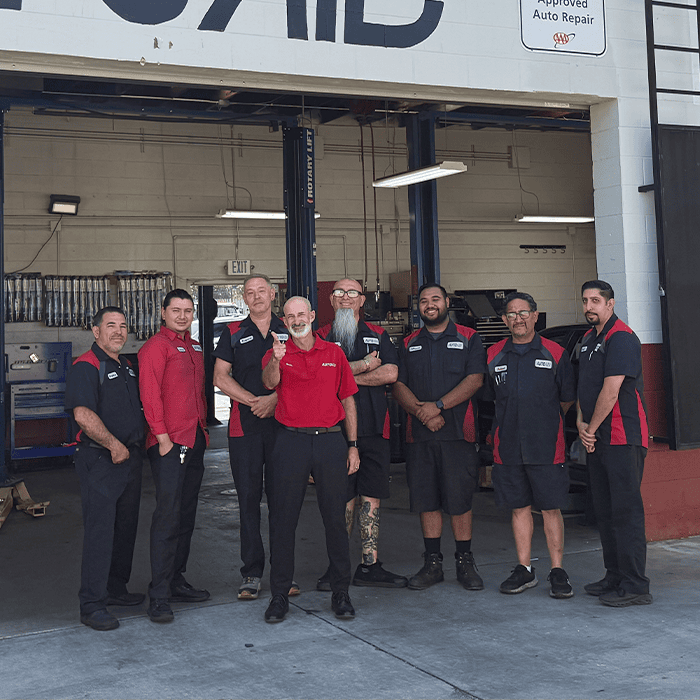
As a family-owned shop that has served the Valley since 1979, we understand that when you bring your vehicle to AutoAid, you expect quality service done quickly and done right the first time.
We inspect the vehicle and diagnose the concern before we write a final estimate. You see what we found and approve the work. Repairs are completed to OEM specifications or better by ASE-certified technicians, then covered by a 3-year/36,000-mile nationwide warranty on newly installed parts (excluding rebuilt or remanufactured components and friction wear items).
If the job is still the dealer’s responsibility under factory warranty or a recall, we will say so. We would rather point you to coverage you already have than sell a repair you should not pay for.
For the rest of the work, such as out-of-warranty diagnosis, maintenance, and repairs, you get dealer-level procedure without dealer-lane delays. Pickup, delivery, shuttle service, and a secure key drop are available if you cannot wait on site.
Call AutoAid Today for Honest Dodge Service
If your Dodge is due for service, showing a warning light, making a new noise, or simply overdue for a thorough inspection, we are ready to look at it.
Walk-ins are welcome. Pickup and delivery are available. Schedule your service today!