

Warning Signs Your BMW Needs Service
Bring the car to our BMW repair shop if you notice any of the following:
- Temperature gauge rising, cooling fan running hard at startup, heater output that comes and goes, or a low-coolant warning
- Sweet coolant smell, dried pink or green crust around hose joints, or unexplained coolant loss
- Burning oil smell, ticking after shutdown, oil spots on the driveway, or oil on the undertray
- Check engine, 4×4, DSC/ABS, battery, or drivetrain warning lights; even if the car still drives
- Rough cold idle, hesitation, misfire, or a sudden drop in power
- Rattle on cold start that fades after a few seconds (timing or VANOS-related concerns need inspection, not a longer commute)
- Battery that needs a jump, electronics that reset, or windows/locks that act “possessed”
- New vibration, clunk over driveway aprons, wandering on the freeway, or uneven tire wear
- Brake pedal that feels longer, grinding, or a brake warning after a stretch of downhill or stop-and-go driving
- A/C that struggles in summer heat, or a cabin that never quite cools
If the car overheats, loses power dramatically, or makes a new metallic noise, stop driving it and call.
BMW Models We See Most Often
Not every BMW requires extensive repair work. Many remain reliable for years when maintenance is performed on schedule. Higher ownership costs more often result from deferred attention to known wear items or from early warning signs that were not investigated promptly.
The following models and generations are among those San Fernando Valley owners bring in most frequently, along with the patterns our technicians commonly observe:
- 3 Series (E90, F30, and later G20): These vehicles accumulate significant commute mileage. Earlier F30 models equipped with the N20 four-cylinder engine warrant close attention to timing-chain condition, particularly on examples built before mid-2015. Across generations, electric water pumps, thermostats, oil-filter housing gaskets, valve-cover leaks, ignition coils, and aging batteries are frequent service items. Suspension bushings and control arms also tend to wear more quickly under the stop-and-go and surface conditions typical of Valley roads.
- 5 Series (E60, F10, G30): Greater vehicle mass and denser electronics place additional demand on cooling and electrical systems. Cooling-system plastic components, oil leaks, VANOS-related idle or power concerns, and electrical faults associated with a weak 12-volt battery appear regularly. Higher-mileage examples also benefit from thorough inspection of suspension components and braking systems that experience elevated use in traffic.
- X3 and X1: These models are popular for family and freeway use throughout the Valley. Typical needs include xDrive transfer-case service, cooling-system components, oil leaks, and front-end wear. Early N20-powered versions share the same timing-chain considerations seen on comparable 3 Series vehicles.
- X5 and X6: The additional weight of these SUVs can amplify cooling, oil-leak, and driveline issues. Depending on generation and engine, owners should monitor valve-cover and oil-filter housing leaks, electric water pumps, air-suspension components on equipped models, and transfer-case or differential service. Twin-turbo V8 (N63) examples warrant additional scrutiny for oil consumption and related engine-bay leaks.
- Other BMW models we service: 4 Series, 2 Series, X7, 7 Series, and MINI vehicles share many of the same cooling, oiling, battery, and electronic-module patterns. Methodical diagnosis remains essential regardless of model.
Common BMW Repair and Maintenance Needs
BMW maintenance is not mysterious. It is specific.
- Condition-based and interval services: Oil and filter service with the correct specification oil, cabin and engine air filters, spark plugs, brake fluid, coolant inspection or exchange, and transmission or transfer-case fluid when the vehicle and mileage call for it. BMW’s onboard Condition Based Service reminders are a starting point, not a complete ownership plan; especially for cars that idle in traffic or sit in heat.
- Cooling system work: Electric water pumps, thermostats, expansion tanks, plastic fittings, and hoses are among the most important wear items on many 2000s–2010s BMWs. A small coolant loss today is how an overheat happens tomorrow.
- Oil leaks that look “minor” until they are not: Valve-cover gaskets, oil-filter housing gaskets, oil-pan gaskets, and related seals. Leaks that drip onto belts, electrical connectors, or hot exhaust components create secondary damage that costs more than the original gasket.
- Ignition and drivability: Coils, plugs, VANOS solenoids, and related sensors. Misfires, rough cold idle, and a check-engine light should be diagnosed.
- Brakes, tires, and suspension: Valley driving is hard on pads, rotors, bushings, control arms, and shocks. Uneven tire wear is often a suspension issue, not just a tire issue.
- Electrical and battery systems: A weak 12-volt battery or a failing Intelligent Battery Sensor can throw faults that look like a failed module, a transmission issue, or a random warning cluster. Testing the battery and charging system first saves owners from replacing the wrong part.
- xDrive and driveline service: Transfer-case fluid, leaks, and related noises. All-wheel-drive BMWs need fluid service even when the car “feels fine.”
The goal is not to do every possible job on every visit. The goal is to do the right work at the right time, in the right order.
How AutoAid Diagnoses Modern BMWs
A modern BMW is a network of computers sharing data over multiple modules. A generic code reader can tell you a symptom. It rarely tells you the cause.
AutoAid’s process is built to keep owners from paying twice:
- Listen to the complaint. When it happens, in what temperature, after how many miles, and whether it started after a jump-start, a battery replacement, or a heat wave.
- Confirm the complaint. A code stored six months ago is not automatically today’s problem.
- Scan the relevant systems thoroughly. Engine, transmission, ABS/DSC, body modules, and battery data; not just the one light on the dash.
- Test before replacing. Cooling-system pressure tests, battery and charging tests, smoke or leak checks, live-data review, and component tests separate a failed part from a failed circuit, a low battery, or a software/communication issue.
- Inspect related wear items while the system is open. If the water pump is coming off, the thermostat and obvious plastic cooling parts get evaluated in the same visit when it saves labor and prevents a repeat teardown.
- Explain findings in order of risk. Safety and engine-protection items first. Convenience items next. Optional work last.
That sequence matters on BMWs because one weak battery can imitate several failed modules. One oil leak can destroy a serpentine belt. One ignored coolant seep can warp an aluminum head. Guessing is expensive. Diagnosing correctly is cheaper.
AutoAid’s Strategy for Long-Term BMW Reliability
The most expensive BMW repairs are usually late repairs.
AutoAid’s approach is condition-based care: use the car’s service indicators, then verify actual condition. Mileage, heat, oil quality, short-trip driving, and previous work all change when a part is truly due.
That strategy looks like this in practice:
- Shorter oil intervals than the longest factory window on many turbocharged engines, using the correct BMW-spec oil. Clean oil protects VANOS, timing components, turbos, and high-pressure fuel systems.
- Cooling-system inspection as a scheduled item, not an emergency item. Pumps, thermostats, tanks, and hoses fail on a clock. Catching a crack is cheaper than catching steam.
- Fix oil leaks while they are still “just a leak.” Oil on rubber belts and electrical connectors is a secondary failure waiting for a hot day.
- Treat the 12-volt battery as a critical part. On late-model BMWs, it is not a $140 afterthought. It is the foundation the modules stand on.
- Service fluids that owners forget exist. Brake fluid absorbs moisture. Transfer-case and differential fluids shear. Ignoring them is quiet until it is not.
- Bundle labor-smart work. If a housing is already off, replace the gasket and inspect the parts you will otherwise pay to reach twice.
- Document everything. The next visit is faster and more accurate when the shop already knows what was replaced, what was deferred, and how the car behaved last time.
This is how BMWs stay reliable. Not by magic, but by refusing to let small, predictable wear become a cascade.
How Quality BMW Service Protects the Experience of Ownership
A BMW is purchased for the way it drives, responds, and feels over time. That experience depends on more than the badge. It depends on cooling systems that hold temperature under load, electronics that behave consistently, drivetrains that shift cleanly, and maintenance that prevents small issues from becoming interruptions.
The right shop protects that investment by treating the vehicle as a complete system rather than a series of isolated complaints:
- Using quality parts suited to the application and documenting the work performed
- Addressing cooling weaknesses, oil leaks, and warning lights before they affect performance or reliability
- Maintaining batteries, charging systems, and related electronics so modules communicate correctly and the car remains predictable
- Following service logic appropriate to BMW engineering instead of a generic maintenance menu
- Explaining findings clearly so owners can make informed decisions about what is urgent and what can be planned
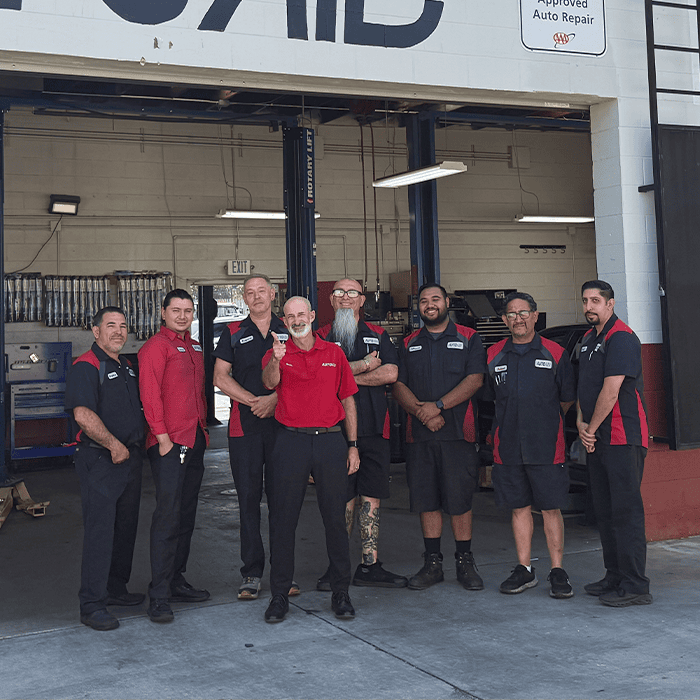
When cooling, oiling, electrical, and driveline systems are kept in good condition, the car continues to deliver the precision, comfort, and confidence that define BMW ownership. A quality independent shop such as AutoAid helps preserve that experience through accurate diagnosis, timely repairs, and consistent care; protecting both the mechanical integrity of the vehicle and the daily satisfaction of driving it.
Why BMW Owners Save Money by Staying With a Quality Shop That Knows the Car
AutoAid’s approach is built around relationships with the owner and with the vehicle itself. BMW ownership is more satisfying when the shop understands both how the car is used and how it has been maintained over time.
When the same technicians see the same BMW across multiple visits, service becomes more precise and more useful:
- Diagnosis starts from a known baseline instead of a blank page
- Recommendations reflect the vehicle’s actual history, prior work, and the owner’s priorities
- Patterns such as seasonal heat-related issues, battery behavior, or intermittent drivability concerns are recognized earlier
- Communication is clearer because less time is spent re-explaining symptoms or past repairs
- Convenience options become part of a consistent process rather than a one-time arrangement
This continuity allows AutoAid to deliver the kind of service BMW owners typically want: accurate answers, appropriate recommendations, and repairs that protect performance and reliability without unnecessary work.
The relationship turns each visit into informed care rather than a series of disconnected transactions. Over time, our shop becomes familiar with the vehicle’s specific characteristics and the owner’s expectations. That familiarity is what makes ongoing BMW service more efficient, more relevant, and more aligned with how the car is actually driven.
Talk With AutoAid About Your BMW Today
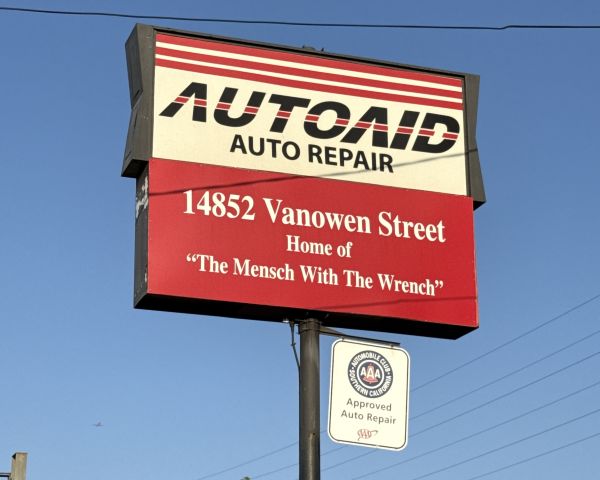
When your BMW needs maintenance or repair, the most useful next step is a clear inspection and an honest recommendation. AutoAid provides that level of care and is located at 14852 Vanowen Street in Van Nuys. We are open Monday through Friday, 8 a.m. to 5 p.m.
To schedule service, call (818) 296-0782.