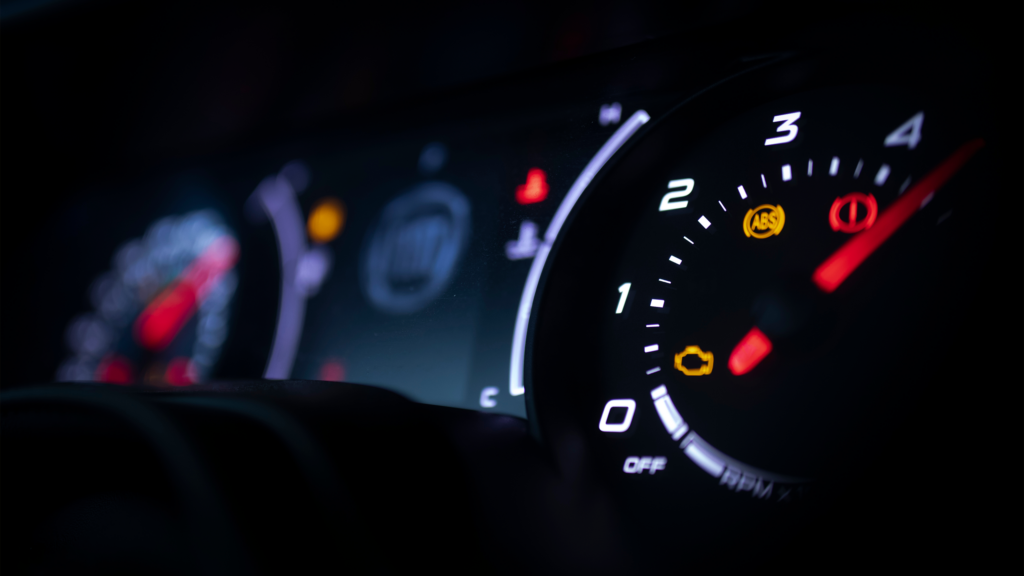
Do You Know What These Dashboard Safety Icons Mean?
A light pops on while you’re driving through the San Fernando Valley, and your first thought is usually the same: Is this serious, or can I keep going?
Your dashboard is one of the fastest ways your vehicle can ask for help. Some icons mean pull over now. Others mean schedule a visit soon. A few are just telling you a feature is on. Knowing the difference can protect your engine, your brakes, and your safety; and it can keep a small problem from turning into a major repair.
At AutoAid in Van Nuys, we see these lights every day on everything from daily drivers to Mercedes-Benz, BMW, Audi, and other premium vehicles.
Here is a practical guide to the main safety icons, what they typically indicate, and when it’s time to bring the car to the shop.
Start With Color: Red, Amber, or Green
Most modern dashboards follow a traffic-light system.
- Red means urgent. Stop as soon as it is safe. Continuing to drive can damage the vehicle or put you at risk.
- Amber, yellow, or orange means caution. The car may still be drivable, but something needs attention. Get it diagnosed soon, not “when you get around to it.”
- Green or blue is informational. High beams, turn signals, and many driver-assist features use these colors when a system is simply on.
Two more rules matter:
- Most warning lights flash on when you start the car, then go out. That self-test is normal. A light that stays on or comes on while driving is the one that needs attention.
- A flashing warning is almost always more serious than a steady one. Treat a flashing check engine light as urgent.
Your owner’s manual is the final word for your specific make and model. Newer vehicles often add a written message in the instrument cluster along with the icon. When in doubt, treat the more serious interpretation as the right one until a technician confirms otherwise.
Red Safety Icons: Stop as Soon as It’s Safe
These are the lights we do not want you to “see if it goes away.”
Oil pressure warning
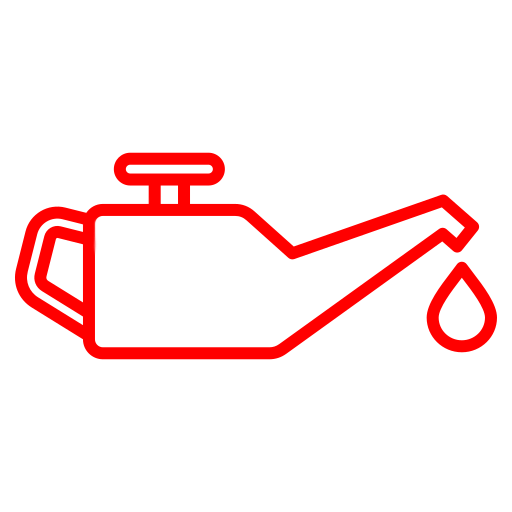
This icon looks like an old-fashioned oil can, often with a drip from the spout. It does not simply mean “add a quart when you can.” It means oil is not circulating at a safe pressure. Without that pressure, engine bearings can be damaged in minutes.
What to do: Pull over safely, shut the engine off, and do not keep driving to “make it home.” Check the oil level only if you can do so safely and know how. If the level is fine or the light stays on after a top-off, the car needs to be towed.
Bring it in when: This light comes on at any time while the engine is running.
Engine temperature warning
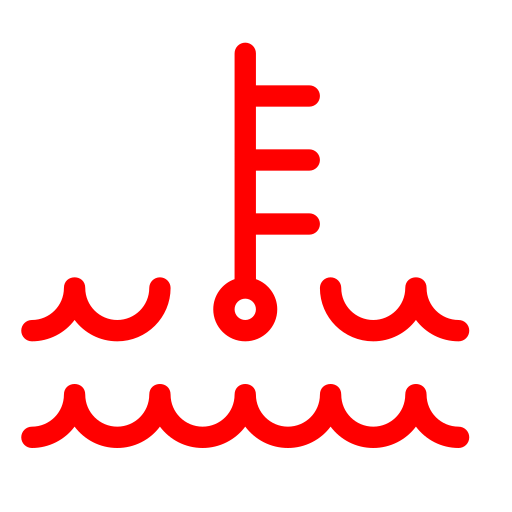
This usually looks like a thermometer sitting in wavy lines. It means the engine is running too hot. Overheating can warp cylinder heads, damage gaskets, and quickly turn a coolant issue into an engine repair.
What to do: Pull over, shut the engine off, and let it cool. Do not open a hot radiator cap. Watch for steam, a sweet coolant smell, or a temperature gauge pinned high.
Bring it in when: The light comes on, the gauge climbs, or the engine overheats even once. Heat, stop-and-go traffic, and hill driving around the Valley can expose cooling-system problems that were already developing.
Brake system warning
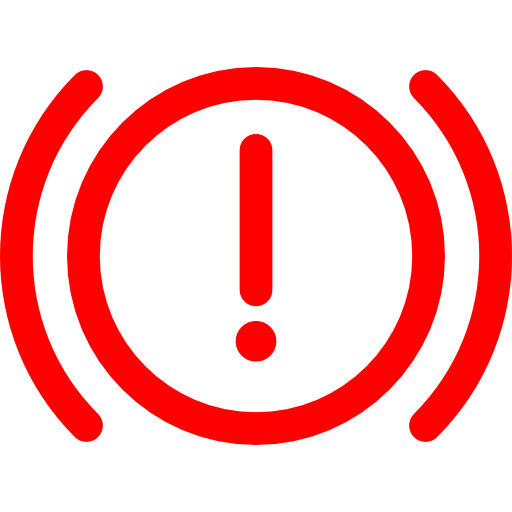
This red icon often shares space with the parking-brake reminder. If the parking brake is fully released and the light stays on, the car may have low brake fluid, a leak, worn pads that have dropped the fluid level, or another hydraulic problem. Soft pedal feel, a longer stopping distance, or a grinding noise makes this even more urgent.
What to do: Stop as soon as it is safe. Do not assume it is “just the parking brake” if you already released it.
Bring it in when: The light stays on with the parking brake off, the pedal feels different, or you notice leaking fluid.
Battery/charging system
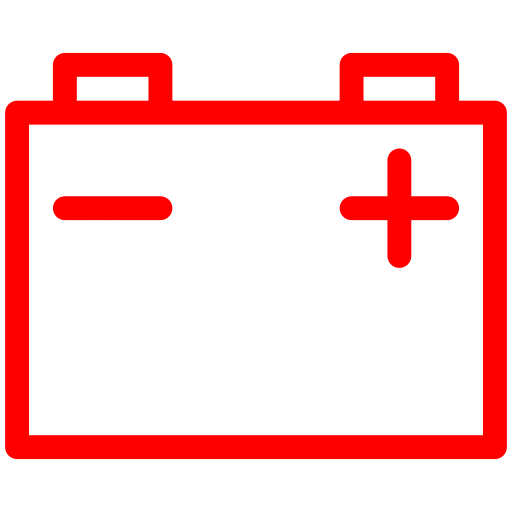
This looks like a rectangle with + and – terminals. The battery is not being charged properly. Common causes include a failing alternator, a worn belt, poor connections, or a battery that can no longer hold a charge. You may still have a few miles of reserve power, or you may stall in traffic.
What to do: Reduce electrical load (A/C, heated seats, extra accessories) and head to a shop if the car is still running smoothly. If lights dim, the car stumbles, or the light came on with other warnings, stop and arrange a tow.
Bring it in when: The light stays on after startup or appears while driving.
Airbag/SRS warning
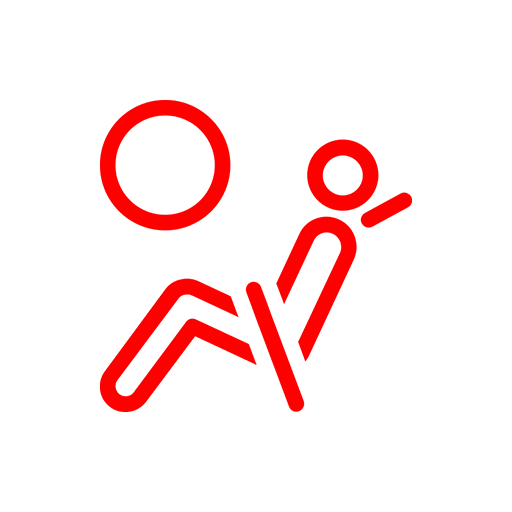
This icon shows a person seated with a circle in front of the chest or head. The supplemental restraint system has detected a fault. The car will usually still drive normally, which is why this light gets ignored. The risk is that an airbag or seat-belt pretensioner may not deploy in a collision.
What to do: You can typically drive to the shop, but do not reset the light and forget it.
Bring it in when: The light stays on after startup or returns after being cleared. This is especially common after seat work, battery replacement, or water intrusion, and it should be diagnosed with proper SRS equipment.
Power steering warning

A steering-wheel icon, sometimes with an exclamation mark, can indicate a fault in hydraulic or electric power steering. Steering may suddenly get heavy. That is a safety issue in traffic and in parking lots.
What to do: Slow down, allow extra room to maneuver, and have the system inspected before the next long drive.
Bring it in when: The light is on, the steering effort changes, or you hear a whine from a hydraulic pump.
Amber Safety Icons: Drive Carefully and Get a Diagnosis Soon
Amber lights are not an invitation to wait until the next oil change “if it still feels fine.” On modern vehicles, especially European luxury models, these systems are tied to sensors, modules, and safety electronics. Waiting often costs more.
Check engine light
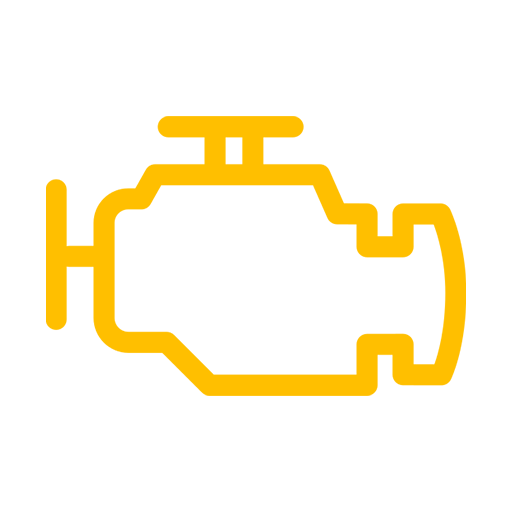
This is the most common light we see, and the most misunderstood.
- A steady check engine light means the computer has stored a fault related to emissions, fuel delivery, ignition, sensors, or a related system. Causes range from a loose fuel cap to a misfire, failing oxygen sensor, or catalytic converter problem.
- A flashing check engine light is different. It often means an active misfire that can overheat and destroy a catalytic converter in a short time. Treat it like a red light: reduce speed, avoid hard acceleration, and get the vehicle in immediately.
In California, a check engine light will also cause a smog-check failure.
Bring it in when: The light is on at all; and immediately if it is flashing, if the engine runs rough, or if you notice a loss of power.
A basic code reader is only a starting point. The code is not the diagnosis. Our technicians use professional-grade scan tools and follow-up testing to find the actual cause instead of guessing at parts.
ABS warning
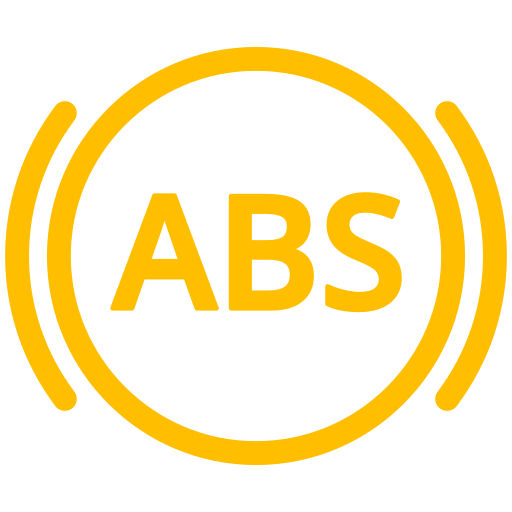
The anti-lock braking system may not function correctly. Regular brakes should still work, but the car may lock a wheel under hard braking or on wet pavement.
Bring it in when: The ABS light stays on, especially if it appears with the traction-control or brake light.
Tire pressure monitoring system
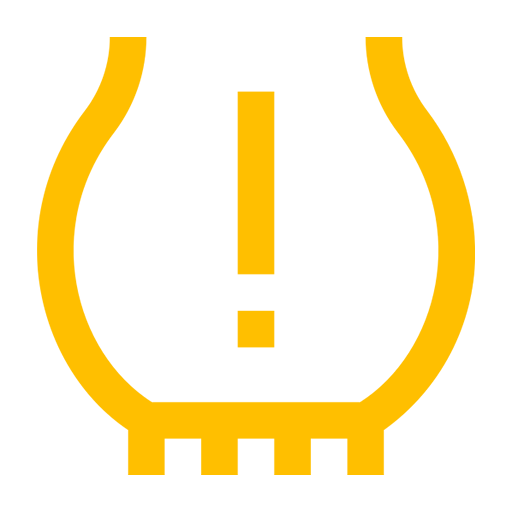
One or more tires is underinflated, or a TPMS sensor has failed. Low pressure affects handling, braking, tire wear, and the risk of a blowout. After a temperature swing, a tire that was “fine yesterday” can drop enough to trigger the light.
What to do: Check pressures when the tires are cold and inflate to the sticker on the driver’s door jamb, not the number on the tire sidewall. If the light stays on after a proper fill, a sensor, leak, or puncture needs attention.
Bring it in when: The light returns after inflation, one tire keeps losing air, or you cannot find the leak.
Traction control/stability control
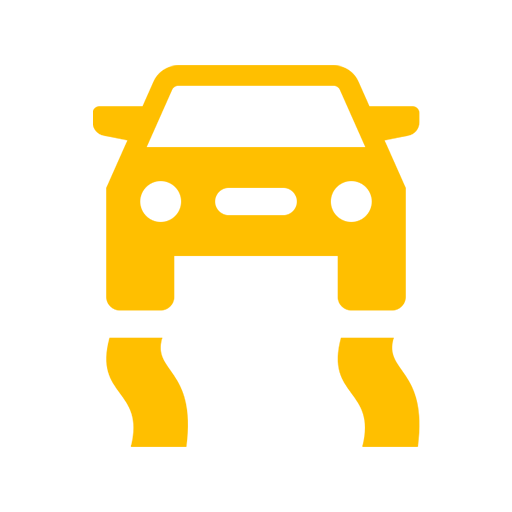
This light can flash when the system is actively working on a slick road; that is normal. If it stays on, the system may be disabled because of a sensor, module, or related brake/ABS fault. You have less electronic help if a wheel starts to slip.
Bring it in when: The light stays illuminated, or it appears with ABS or other chassis warnings.
Master warning/general alert

Many newer or luxury vehicles use this as a “look at the message center” light. It can point to anything from a minor door-ajar reminder to a more serious system fault.
Bring it in when: The triangle is paired with a mechanical warning, a drivetrain message, or a warning you cannot clear by closing a door or buckling a seat belt.
A Quick Way to Decide: Shop Now, Soon, or Keep Driving?
Use this as a simple filter.
Stop and arrange a tow or immediate visit if:
- The light is red and related to oil pressure, temperature, or brakes
- The check engine light is flashing
- The vehicle is overheating, losing power, making a new grinding or knocking noise, or the brake pedal feels soft
Drive carefully to AutoAid if:
- A steady check engine, ABS, TPMS, traction, battery, airbag, or master-warning light is on
- The car still steers, stops, and runs reasonably well
- You want the problem diagnosed before it strands you or fails a smog check
Usually informational only if:
- The light is green or blue and matches a feature you turned on
- The warning appeared at startup and went out within a few seconds
If you are unsure, err on the side of getting a diagnosis. That is always cheaper than replacing an engine, converter, or set of tires you could have saved.
Why Warning Lights Matter More on Today’s Vehicles
Older cars gave you a gauge and a couple of bulbs. Newer vehicles, especially German and other luxury brands, monitor dozens of systems at once: oil pressure and level, coolant temperature, charging voltage, brake-fluid level, tire pressure, airbags, steering assist, emissions, and stability control.
That complexity is a benefit when the shop can read it correctly. It becomes expensive when a light is ignored, a cheap scanner is treated like a diagnosis, or the wrong part is replaced on a guess.
At AutoAid, our ASE-certified technicians work on domestic, Asian, and European vehicles every day. We use advanced diagnostic equipment, explain what we find, and recommend only what the vehicle actually needs.
Our family-owned shop has been serving Van Nuys and the San Fernando Valley since 1979, and we back qualifying repairs with a quality warranty.
If a dashboard icon has you second-guessing the drive, give us a call today.
Some Additional Questions Our Customers Ask
Can I keep driving with the check engine light on?
If it is steady and the car is running normally, you can usually drive a short distance to the shop. If it is flashing, the engine is misfiring, or you smell fuel, get the vehicle in immediately.
The light went off by itself. Am I in the clear?
Not necessarily. The computer may have stored a pending or history code. An intermittent fault can return, often at the worst time. A scan is still worthwhile.
Do luxury cars use different warning icons?
The core symbols are similar, but BMW, Mercedes-Benz, Audi, and other premium brands often add cluster messages, multiple warning levels, and brand-specific service indicators. Those extra messages are useful, as long as someone who knows the platform reads them.
Should I stop at a parts store for a free code read first?
A code can be a clue. It is not a repair plan. Many lights share similar codes for very different problems. Professional testing is what keeps you from replacing parts you do not need.
See a Warning Light? We’ll Tell You What It Means
A dashboard icon is not there to scare you. It is there to give you a chance to act before a safety system fails or an expensive component is damaged.
If a red or amber light is on and the vehicle is safe to drive, bring it to AutoAid at 14852 Vanowen St, Van Nuys. We’ll read the warning, inspect the system behind it, and give you a clear recommendation so you know whether you need a repair now or can plan it on your schedule.
If the vehicle is unsafe to drive, or you have further questions, call (818) 296-0782 to schedule a diagnostic visit. We’re open Monday through Friday, 8 a.m. to 5 p.m., and we can help with pickup, drop-off, and shuttle service when you need it.